GoRental UPS &
Allocate Space
This case study shows how Allocate Space enables unified management of distributed devices and assets to protect critical cold chain operations.
Clinics and healthcare facilities rely on temperature-controlled refrigeration to store vaccines, medications, and other temperature-sensitive supplies. Regulatory requirements mandate that temperatures are monitored, logged, and kept within strict thresholds to ensure patient safety and compliance.
However, many clinics depend on commercial fridges connected to standard power supplies, making them vulnerable to unexpected power outages, especially after operating hours.
Each refrigerator, power unit, and temperature sensor is a critical asset that must be monitored and managed continuously, often across multiple clinic locations.
Improved Cold Chain Reliability
Stronger Compliance and Audit Readiness
Reduced Operational Overhead
Challenge
Power outages pose a serious risk to cold chain integrity. When outages occur, clinic staff often have limited visibility into fridge temperature conditions and no immediate way to respond until personnel return on-site.
Common challenges include:

Short backup power duration from traditional UPS systems.
Manual temperature checks and paper-based logs.
No real-time alerts when temperature thresholds are breached.
Inability to assess risk remotely after office hours.
High risk of vaccine and medication spoilage.
These gaps increase compliance risk and operational stress for clinic operators.
Healthcare operators needed a solution that could maintain refrigeration during extended power outages, monitor temperature continuously and in real time, alert staff immediately when thresholds are breached, provide visibility across one or multiple clinic locations, support audits and compliance through historical reporting, reduce reliance on manual checks and after-hours site visits.
Solution
Allocate Space deployed a Smart UPS solution designed specifically for cold chain protection in healthcare environments. The solution integrates long-duration backup power with real-time monitoring and alerts, without requiring changes to existing fridge infrastructure.
Continuous Power and Monitoring
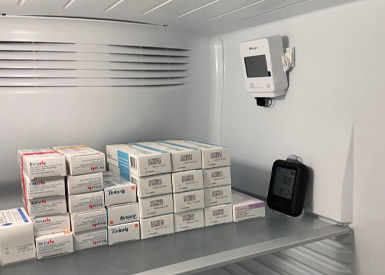
The Smart UPS provides 8 to 12 hours of uninterrupted power during outages, ensuring refrigerators remain operational long enough for staff to assess and respond appropriately. Temperature sensors placed inside the fridge continuously monitor internal conditions.
Centralised Asset and Device Monitoring
The Smart UPS solution brings power, temperature, and device status into a single system, allowing clinics to manage all critical cold chain resources centrally.
All temperature, battery, and power data is captured and displayed through a shared dashboard. Clinic operators and administrators can:
View real-time temperature and battery status.
Receive SMS and email alerts when thresholds are breached.
Monitor multiple clinics from a single console.
Access historical data for audits and reporting.
Results
Improved Cold Chain Reliability
Clinics gain extended protection during outages, reducing the risk of spoilage and improving overall cold chain reliability.
Faster Decision-Making
Real-time alerts and remote visibility allow staff to decide quickly whether immediate action is required or if the situation can wait until the next working day.
Reduced Operational Overhead
Automated monitoring and reporting eliminate manual temperature logging and reduce after-hours site visits. Clinics gain a single source of truth for managing refrigeration assets, power systems, and temperature data across locations.
Stronger Compliance and Audit Readiness
Historical temperature and energy data supports regulatory audits and operational reviews with clear, traceable records.
Alerts are triggered at defined battery and temperature thresholds, enabling timely intervention when required.
Scalable and Low-Maintenance
The solution is designed to scale easily across multiple sites, with proactive maintenance and support included. Hardware replacement, monitoring, and system upkeep are managed centrally, reducing the operational burden on clinic staff.